Second livestock arena at MSU a long time coming
A second arena could accommodate warm-ups, larger events or simultaneous events
Planning phase will consider two versions of second arena
EAST LANSING — It’s already a project more than half-a-decade in the making, but now the dream to improve arena space at the Farm Bureau Pavilion at Michigan State University is awakening to a new era.
In December, the Michigan State University Board of Trustees granted an “authorization to plan” a second arena at the livestock pavilion.
George Smith, Director of AgBio Research at Michigan State University, suggested adding a second arena to the Farm Bureau Pavilion could put the facility on a national stage.
“We're so excited about this because it will allow us to create increase the size, scope, quality and number of events that are held at this premier facility, and in some cases, perhaps host more regional or national type shows and events because of the additional capacity that the addition to the facility will provide,” Smith said in an interview with The Michigan Hoof Beat.
The Farm Bureau Pavilion at Michigan State University is popular. The folks who run it say it’s booked nearly every weekend of the year. Smith says it’s typical for events to book the facility two years out.
A second arena could allow separate events to share the space concurrently, Smith says, calling it “a big, big functional advantage.”
Key stakeholders (livestock and horse organizations that regularly rent the facility) have long said they want a second covered ring.
“It's something we've been wanting for years,” says Sasha Glover, vendor coordinator and communications director for the Michigan Horse Council, which puts on the Michigan Horse Expo at the Pavilion. “It would make a tremendous difference.”
 Karen Hopper Usher
Classifieds are here!
While there are outdoor, uncovered rings where horses and other livestock can warm up before competing inside the pavilion, during winter or inclement weather, the outdoor rings aren’t ideal.
The Michigan Horse Expo brings in close to 100 horses, Glover says.
“It's just such a struggle to find a place for them to warm up,” Glover says. “Just like any other key equine stakeholder in the pavilion, this would be just a tremendous expansion."
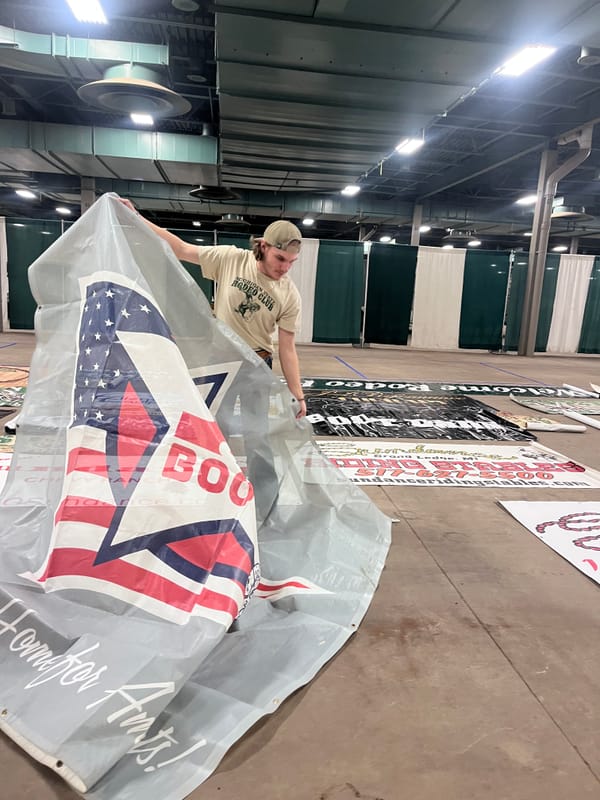
The MSU Rodeo Club hosts the Spartan Stampede at the pavilion annually in February.
It seems like “there’s normally a big snowstorm, the week of the stampede,” says Eliza LaFavers, president of the club.
The stampede builds a warm-up pen inside the exhibition space, laying down footing to try to keep the warm-up area from feeling like it’s on concrete.
It gets hot and dusty, according to LaFavers.
Still, the Stampede has been voted the top indoor rodeo by the International Professional Rodeo Association several times since 2011, and the Stampede’s success has contributed to the club’s coffers.
MSU Rodeo Club pledged $100k for new arena
In 2017, the rodeo club decided to pledge $100,000 to MSU to add a covered arena at the pavilion, in the hopes that making the pledge would inspire others to support the project.
They succeeded in getting Smith on board.
“That was a really powerful message to me,” Smith says, noting the many other ways students could have chosen to spend club funds. “That's what motivated me to talk to our Dean about trying to lead the fundraising efforts.”
The club made an official announcement back in October of 2018, recalls Brian Nielsen, a professor of equine exercise physiology at MSU and the rodeo club’s advisor, in an email to The Michigan Hoof Beat.
“While it looked like things were going to make real progress at that point, a little over a year later COVID basically shut the world down - stalling progress.” Nielsen says.
Club president LaFavers, who is a junior, says she didn’t even know about the pledge when she joined the club as a freshman; it wasn’t until she joined the club’s board her sophomore year that she learned about the commitment.
With an event of the Stampede’s size, LaFavers says just earning their money back is good news for the club.
Ultimately, “whatever money we do make, in addition, just allows us to be in our community more,” LaFavers says.
Two possible versions of the new arena
A steering committee for the expansion project facilitated conversations with the various stakeholder groups that use the pavilion, according to Smith.
It’s not just equestrians. Other livestock groups book the facility for competitions and exhibitions, and even boats and recreational vehicles lay claim to the pavilion for the Lansing Boat and RV Show.
The pre-planning phase looked at infrastructure considerations—such as roads, utilities and zoning—to identify possible sites for the arena, Smith says.
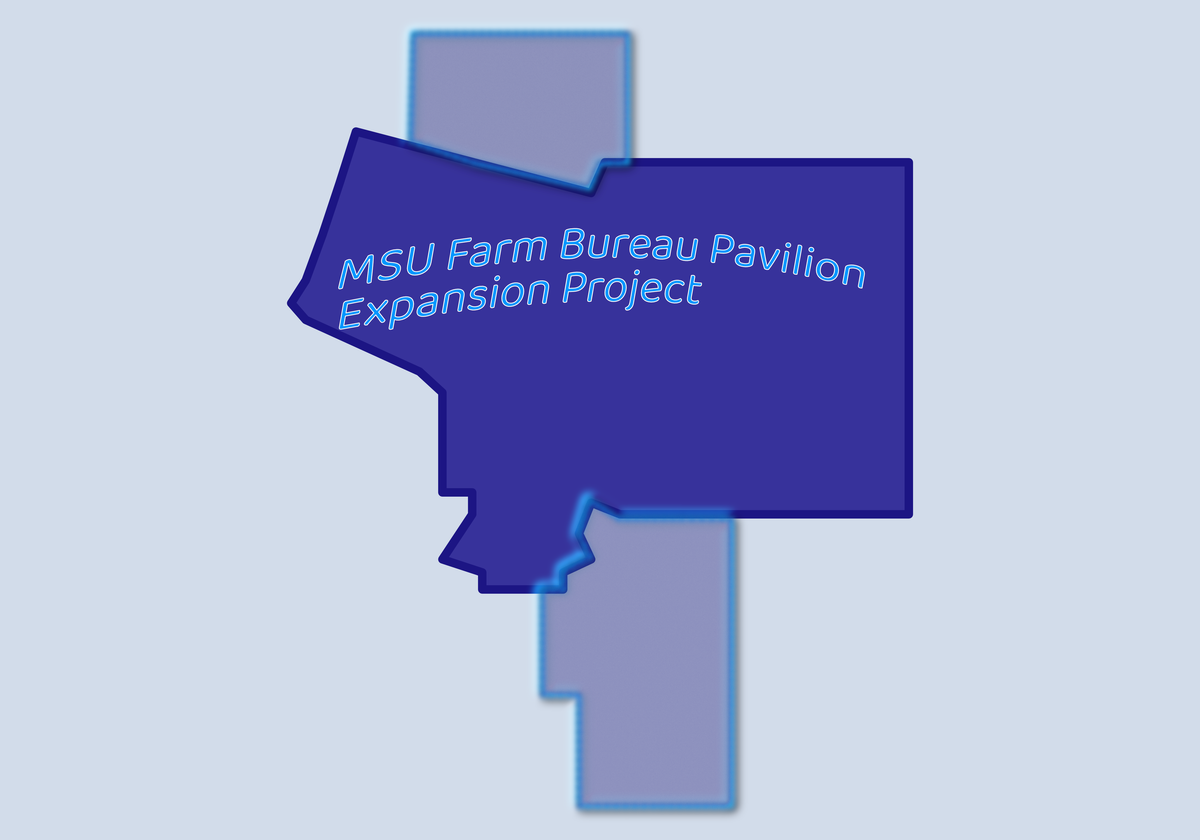
Two options have been put forth. A smaller, less-expensive version would attach to the north-east side of the building between the existing arena and Farm Lane, while the larger, more expensive version would extend westward from the western side of the building towards Pavilion Drive, attaching where the auditorium and exhibition space meet.
“Sometimes delays can be advantageous,” Nielsen wrote. “It appears that what will eventually come to fruition is much more than we ever dreamed.”
The university estimates that the “Basic Concept” would cost $10-11 million. The 24,200-foot addition would “allow exhibitors to warm up in the covered addition and transition quickly to showing in the main arena. The connected walkway provides exhibitors and guests with a designated route between the arenas. This concept situates the show office near both the main (current) arena and warm-up arena, as well as adjacent to the exhibitor area,” according to a brochure.
The “Expanded Concept” would cost $16-19 million, according to the university’s estimate.
The 40,700-foot addition “includes a second full-size arena and significantly more warm-up space than the Basic Concept. By enabling controlled access to portions of the pavilion complex, both arenas can operate concurrently or independently, facilitating spectators at events in either location,” according to the brochure.
The expanded concept would also mean more room for spectators. It would add 200 seats in the new arena (the existing arena can seat 2,000, and the auditorium can seat 300, per the pavilion’s website).
Raising the funds
Smith isn’t forecasting a protracted fundraising period.
“We're committed to making it happen,” Smith says. “We're going to try to do some fundraising in the short term, but we're not looking at this is another five-year fundraising effort before we actually hit ‘go’ and build a facility, because it's greatly needed by all the groups that utilize the pavilion.”
While the smaller, less expensive arena wouldn’t expand spectator capacity, it would still be “a huge step forward,” Smith says. The larger, more expensive arena, “has that greater functional capacity that we know all of our stakeholders would really benefit from . . . but that's going to take raising additional revenue.”

Place a classified ad in The Michigan Hoof Beat.
“The expansion is an opportunity to meet the growing needs of the community,” says Kyle Cutler, director of corporate relations and development at the College of Agriculture and Natural Resources Advancement Office.
“The 100K+ annual guests of the Michigan Farm Bureau Pavilion have a connection with the space that often is generational. It is a space where families come together. Old friends reunite. And traditions are kept,” writes Cutler in an email. He likened the pavilion to another of MSU’s famous facilities.
“This community views the space as their Breslin Center for the Agricultural Community,” Cutler says, referencing the home of Spartan basketball, amongst other college sports.
Sponsorship opportunities that will fund the arena development could include naming rights for the arena or classrooms.
Cutler says the university will work with donors to find the best fit.
“We work with companies on the duration that works best for them. This can include multi-year commitments or a one-time contribution,” Cutler says.
For individuals, donating to the pavilion is often about “leaving a legacy and helping the space continue to provide access for future generations,” Cutler says. “Donations can be pledged over a period of 5 years and they can work with me to learn more. Larger gift levels can name spaces within the current or new expansion.”
The Michigan Farm Bureau Family of Companies and GreenStone Farm Credit Services form “the foundation of financial support that will allow us to pursue this new and exciting addition to this showcase facility,” Smith says.
You can reach Kyle Cutler at cutlerky@msu.edu.
Donate to the MSU Pavilion Expansion Fund at the College of Agriculture and Natural Resources (check the label before submitting).